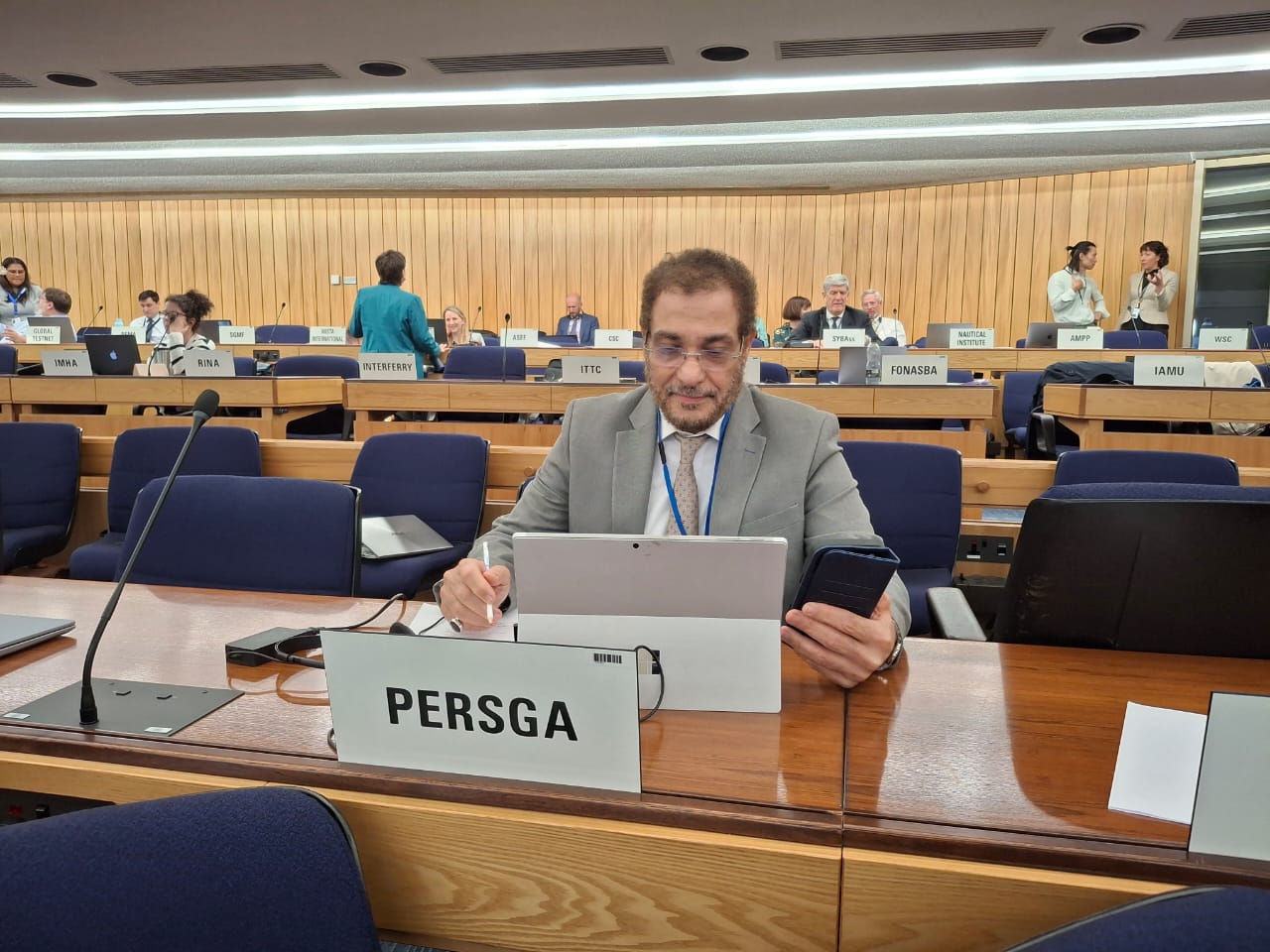
From 27 April to 1 May 2026, 173 IMO Member States gathered in London at IMO Headquarter during the 84th session of the of the Marine Environment Protection Committee (MEPC 84) and considered a wide range of important agenda items. These included MARPOL Annex VI, reduction of greenhouse gas (GHG) emissions from ships and the Net-Zero Framework (NZF), ship energy efficiency, marine pollution prevention and reduction, management of harmful aquatic organisms in ballast water, reduction of underwater radiated noise, and marine plastic litter from ships, particularly plastic pellets. The 84th session concluded with a commitment to rebuild consensus on global shipping emissions, while also raising concerns over environmental risks in the Strait of Hormuz and adopting new measures aimed at reducing air pollution in the Northeast Atlantic.
In this context, PERSGA, headed by the Secretary General, participated in person and closely followed the Committee’s deliberations. PERSGA also engaged with IMO technical experts during side technical meetings to explore future capacity-building activities aligned with MEPC outcomes. Discussions focused on key issues under MARPOL Annex I (oil pollution from ships), Annex V (garbage from ships), and Annex VI (air pollution from ships), in addition to emerging issues such as marine plastic pellets and underwater radiated noise.
In parallel, PERSGA met with the International Oil Pollution Compensation Funds (IOPC Funds) to discuss recently translated Arabic publications prepared by PERSGA and to explore potential joint activities supporting the ratification and implementation of the HNS Convention by Member States, in anticipation of its expected entry into force in 2027. These efforts complement the ongoing updating of Regional and National Oil and Chemical Spill Contingency Plans under the SFISH Project.
The MEPC 84 Committee will resume its Second Extraordinary Session on Friday, 4 December 2026, subject to confirmation during the 85th session (MEPC 85), scheduled to convene from 30 November to 3 December 2026.
These meetings at the International Maritime Organization (IMO) constitute an important platform for PERSGA and its Member States to strengthen cooperation with IMO and other international organisations and advance regional collaboration and progress in marine environmental protection and the prevention of ship-source pollution. This is particularly important as the Red Sea and Gulf of Aden constitute a strategic maritime corridor for international shipping and global trade, as well as a vital economic asset for coastal States. Major marine pollution incidents in the region could therefore result in significant socio-economic and environmental impacts, underscoring the importance of strengthened regional cooperation, preparedness, and marine environmental protection efforts.